
Ocean Trek
- Name
- Mick and Lyn
- Location:
-
335 Elizabeth Drive,
Vincentia, NSW, Australia - Contact:
- 02 44416232
- Contact:
- 0413759649
Last Updated
2012-10-13 09:00:00
Ocean Trek


Ocean Trek is a catamaran style vessel that measures 18 meters in length powered by two 671 Detroit diesel engines giving a top speed of 10 knots. 110 , 240 & 415 volts electrical power is supplied by 37kva and 17kva generators.
Other features
- Reverse osmosis desalination unit
- First aid equipment is held on board which includes oxygen and resuscitation equipment
- Spacious dining and saloon area with CD deck, video, TV and tape deck. A marine reference library is available for customer's reference while on board.
- Tender is a 4 meter aluminium duck style vessel
- Galley caters for three meals per day plus after activities snacks ,microwave , Gas and Barbecue cooking facilities , as well as large refrigerators are available for guests use
- Conference room facilities are available with presentation electronic equipment
- Full electronic state of the art navigational aids including: GPS, Electronic hand compass, Electronic Chart, Standard ships compass and charts, Radar, Navigation Instruments, Depth Sounder, Marine Radios, Barometer and weather station , Autohelm
Vessel facilities:
- Capacity 42 guests
- Accommodation is for 21 guests in ten rooms
- Four double bunk cabins
- Six single bunk cabins
- 3 Bathrooms
- 4 toilets
- Retail area
Diving facilities
- Large Dive Deck and easy water exit via stairs
- Compressor and six air banks
- Nitrox Fill Station , all air double filtered
- Hot deck showers
- Scuba Cylinders and weights provided on request
- Scuba equipment for hire including - Nitrox Suunto 'Vyper' diving computers
- Dive torches
- Nitrox compatible equipment
Affiliation:
PADI
Training Level:
Five Star Resort
Boat Description:
Catamaran - Sleeps 23 guests
Sites Visited:
A Divers Destination: Jervis Bay is approximately 120 sq. km of exceptionally clear seawater, fringed by cliffs ,rock platforms and the whitest sands in the world. As a landscape, it is geologically unique ,with its complex combinations of structural warping and faulting of Permian rock strata followed by post-glacial flooding by the ocean. The warping is in the form of a syncline, a saucer-shaped depression in the earths crust of 230-280 million years old Permian sandstone.
The Bay is enclosed by two rocky peninsulas - Beecroft in the north and Bherwerre in the south. The peninsulas on the seaward side is a line of sheer cliffs which tower above the sea up to 135 metres and plunge some 40 meters below the sea level. These formations are what gives Jervis Bay some of its qualities as a Diving Mecca and its listing on the Register of the National Estate and has recently been declared a Marine Park.
The waters of Jervis Bay have particularly clear and pure water due to:
- no large river draining into the Bay
- little urban and industrial development
- the entrance is flanked by miles of rocky coast with no beaches of any size and the cliffs plunging into deep water
- no great movement of shipping.
- the great Australian current that flushes the Bay
Another quality of Jervis Bay is because of its towering cliffs it is able to offer sheltered areas in adverse weather conditions. We are nearly always able to find a suitable area to conduct diving activities and to enjoy the delight of Jervis Bay.
As the season changes so does the diving and the types of animals you visit. In summer our water temperature attracts many different animals. In recent times our Grey Nurse population has been increasing and it is very common to see Grey Nurses on most dives . We have discovered areas which they now frequent in large numbers and stay in the same area until late May.
As the water temperature gets around 19 C the warm Northern current that comes into the Bay brings with it many pelagic animals. It is not uncommon to witness the sail of a Marlin at some of our more popular dive sites And it is not unheard of to encounter a marlin whilst on a dive. Sunfish as also commonly seen on Dives around the Docks ,Point Perpendicular and The Arch. The Red Indian Fish is also seen regularly and we are finding that our sightings are becoming farther afield then a few years ago. If macro life is what you like ,the Hippocampus Abdominalis [Big Belly Sea Horse ] and the Wrights Sea Horse are seen frequently. Sea Fleas and spiders can be found easily as well. Our Weedy Sea Dragon can be seen on most of the dives and many carry eggs during the early part of summer. The young can be found growing bigger at each visit and about May are about 3cm in length. Many unusual fish can also be found ,the Common Stinkfish and Goblin fish to name a few. Areas that divers often do not think to dive are our sea grass and scallop beds , this area is the host of many animals not seen on the rocky reef. Swimming Scallops, Sea Pens , Large Nudibranchs and sea slugs ,Angle Sharks and baby Port Jackson sharks in late summer , to name just a few .
As winter approaches our animals move about . Port Jackson sharks move into the Bay for matting and it is very common to see dozens stacked on top of each other or swimming around in search of their loved one. In June the large cuttlefish become amorous falling in love with everything that moves and finally find love stricken females and have sex with them . Doing nothing else except matting they eventually become weak from lack of rest and food and are no longer able to defend themselves and die [they then become budgie food].
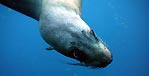
Australian Fur Seals move back to their colony at Steamers Beach. Up to 250 were seen last season and their numbers seem to be growing every year . We have individuals that return each year with one we call Aggro because he swims with his mouth open the whole time he plays with you. Seal diving is exhilarating and exciting .The colony is south of Jervis Bay and we often take this opportunity to do exploratory dives in the many sea caves and cracks that abound in the area.
Some of the best cavern diving can be experienced in Jervis Bay [when conditions and diving experience are acceptable] .In winter when the predominate wind is from the west and the weather more stable we dive the sea caves and deep drop offs outside Jervis Bay cliffs.
We have one diveable wreck inside Jervis Bay ,the wreck of the Firefly a plane which suffered a midair collision in 1956 .It lies in 12 meters of water and is still 'relatively intact' [if divers would leave it alone]. We have wreck sites of the Wandra ,Merimbula and Corangamite, all of which lie to the north and south of Jervis Bay.
Jervis Bay can offer diverse diving to all levels of experienced divers in just about all types of weather. When other diving areas have stopped diving because of adverse weather, often Jervis Bay is still diveable.
Water Temperatures [approximately] and Visibility It is hard to honestly give water clarity estimates ,because of conditions not under our control. [ Just like the weather ] but we can say that Jervis Bay, because of its sea grasses and lack of large rivers, allows for the best visibility that currents and swell allow. Generally average visibility is 10 meters [ of course it can be less ]
Facilities:
- Own Liveaboard(s)
- Own Boat(s)
- Camera Hire
- Nitrox fills
- Scuba hire
- Resort/Intro Dives

Articles
-
 When I learnt - ships were made of wood and men were made of steel
-
by Ric Mingramm
- I was fortunate enough to be paid to gain my PADI qualification through the Royal Australian Navy and was ably instructed by ProDive and Kevin Deakin. Being the macho Navy types ...
- Name
- Mick and Lyn
- Location:
-
335 Elizabeth Drive,
Vincentia, NSW, Australia - Contact:
- 02 44416232
- Contact:
- 0413759649
Last Updated
2012-10-13 09:00:00